Key Takeaway
- Not every child who plays alone has a social problem. Some children are simply cautious, introverted, or slow to warm up.
- Play develops in stages, from parallel play to associative play and eventually cooperative play.
- Parents should observe patterns before reacting, including age, setting, emotional response, language confidence, and classroom behaviour.
- Forcing a child to socialise can backfire if the child feels anxious, overwhelmed, or pressured.
- A supportive preschool, kindergarten, or daycare environment can help children build social confidence gradually.
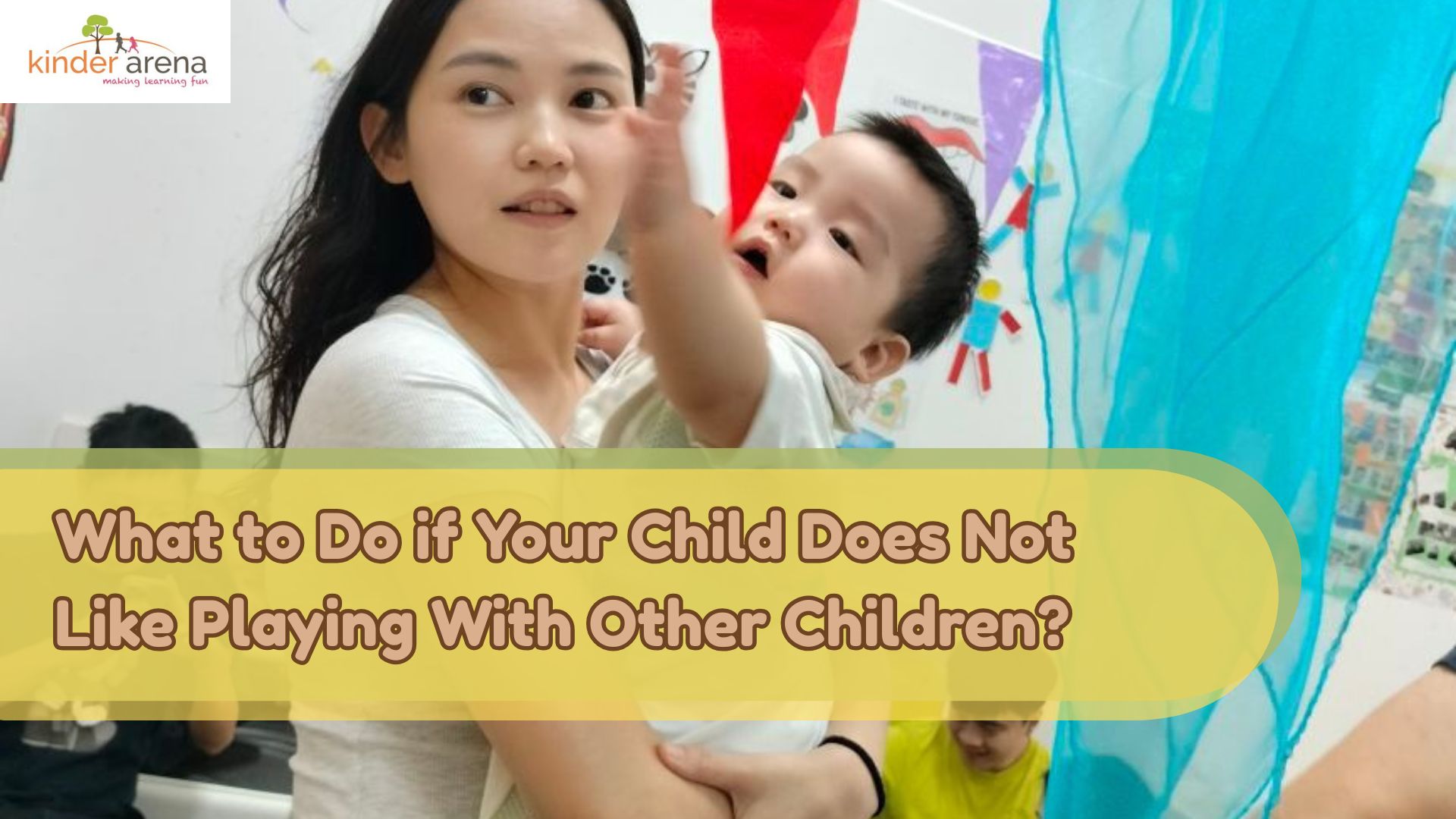
It is easy to compare your child with more outgoing peers and wonder if something is wrong. Perhaps your child stays close to you at birthday parties, watches from the sidelines at the playground, or spends most of their time engaged in independent activities at preschool.
Some parents worry about shyness, social skills, or if their child is missing important opportunities to make friends during preschool.
But not every child who prefers playing alone has a social problem. Some children are naturally more introverted, or slow to warm up in unfamiliar situations.
Others may simply be moving through normal stages of social development at their own pace.
Understanding the reason behind the behaviour is often more important than the behaviour itself. So, let’s talk about it.
Is It Normal If My Child Does Not Like Playing With Other Children?
Yes, sometimes.
Just like learning to walk, speak, or read, social skills develop gradually through different stages as children grow.
In fact, younger children often begin by observing and playing near other children before actively joining in. Child development experts commonly describe social play progressing through stages such as:
- Parallel Play: Playing beside other children without directly interacting.
- Associative Play: Beginning to share, talk, and interact casually during play.
- Cooperative Play: Working together, sharing goals, and participating in group activities.
A child who prefers to play alone may simply be moving through these stages at their own pace.
“ Some children are naturally outgoing and eager to join group activities, while others are more cautious, reserved, or slow-to-warm-up. Neither personality type is inherently better or worse.”
Social Play Development By Age
Age | Common Social Behaviour |
2 Years | Plays beside other children (parallel play) |
3 Years | Begins noticing and joining other children |
4 Years | More interested in group activities and friendships |
5+ Years | Increasing cooperative play and teamwork |
Important: UNICEF notes that early childhood development includes social and emotional development, and children may progress through developmental stages at different rates. Hence, these milestones are intended as general developmental guidance rather than strict deadlines.
Why Some Children Prefer Playing Alone
A child who prefers solitary play is not necessarily unhappy or socially delayed, perhaps a little push or nudge in the right direction is all they need.
1. Temperament and Personality
Some introverted, highly sensitive or naturally observant children feel more comfortable playing independently.
They may prefer watching other children first and joining only after they understand the activity and feel safe.
2. Slow-to-Warm-Up Behaviour
Slow-to-warm-up children often need more time and familiarity before participating in social situations.
Repeated exposure to the same classmates, teachers and environment can gradually help them become more relaxed and willing to join.
3. Communication Confidence
A child may want to play with others but feel unsure about how to enter a game, ask for a turn or express their needs.
This can be especially challenging in multilingual environments where the child is still building confidence in one or more languages.
4. Separation Anxiety
Children who have recently started preschool or daycare may remain close to a trusted adult or choose solitary play while adjusting.
As they develop emotional security and become familiar with the routine, they may begin interacting more naturally.
5. Sensory Overwhelm
Large groups, loud voices, crowded play areas and busy classrooms can feel overwhelming for some children.
Playing alone may be their way of creating a calmer space where they can regulate their emotions and focus comfortably.
6. Previous Negative Experiences
Rejection, exclusion, teasing or conflict during play can make a child more cautious about approaching others again.
Gentle encouragement and positive social experiences can help rebuild their trust and confidence over time.
Read more: Why 4 Years Old is the ‘Golden Age’ for Social Skills
Shyness, Introversion, Or Something More?
Parents should focus on patterns rather than isolated situations.
The 4-Question Parent Check
- Does my child avoid all children or only large groups?
- Does my child play near other children even if they do not join?
- Is my child comfortable with familiar children?
- Is the behaviour improving over time?
Situation | Usually Normal | Worth Monitoring |
Plays alone happily | ✓ |
|
Watches before joining | ✓ |
|
Needs time to warm up | ✓ |
|
Avoids all children consistently |
| ✓ |
Becomes highly distressed in group settings |
| ✓ |
Shows communication concerns alongside social withdrawal |
| ✓ |
What Parents Should Do First
Observe Before Reacting
Look for:
- Specific triggers
- Certain environments
- Certain children
- Noise levels
- School versus home behaviour
Avoid Forcing Social Interaction
Instead of telling your child “Go play with them.”
Try: “Would you like to watch first?” Then afterwards, start small.
- One-to-one playdates
- Familiar cousins or siblings
- Small group activities
- Find good play opportunities
Siblings, relatives, childhood friends and neighbour kids of similar age groups are often the best candidates for this.
Teach Simple Social Phrases
Teach your child these simple phrases to get the conversation started.
Examples:
- Can I play too?
- Can I have a turn?
- Let’s build together.
- Thank you.
- Please stop.
What Parents Can Practise At Home
Social confidence is often built before children enter the classroom.
Goal | Activity |
Build turn-taking | Board games |
Build confidence | Small playdates |
Build communication | Role play |
Build emotional awareness | Storybooks |
Build social skills | Pretend play |
How The Right Preschool Environment Can Help
A good preschool does not force socialisation. Instead, it creates opportunities for children to connect with others naturally.
There’s nothing more joyous than to see your children sharing, talking and be-friending each other’s kids over shared interests or hobbies.
What To Look For In A Preschool
- Warm and responsive teachers
- Small-group activities
- Guided play
- Predictable routines
- Positive teacher-parent communication
- Inclusive classroom culture
- Age-appropriate expectations
Questions Parents Can Ask During A School Visit
If your child is naturally shy and you’re worried about their social interactions, you can gauge with the kindergarten by asking the following questions:
- How do you support shy children?
- How do teachers encourage group participation?
- How are conflicts handled?
- How do you help children make friends?
- How do you communicate behavioural observations to parents?
For younger children attending childcare centres, parents may also wish to ensure the centre is properly registered and follows recognised early childhood education standards.
When Should Parents Seek Professional Advice?
Parent should consider professional guidance if they notice:
If You Are Concerned About… | Who You Can Speak To |
Social interaction and behaviour | Paediatrician or Developmental Paediatrician |
Speech and communication | Speech-Language Therapist |
Sensory or daily functioning challenges | Occupational Therapist |
Emotional or behavioural concerns | Child Psychologist |
Broader developmental concerns | Child Development Centre (CDC) or Early Intervention Team |
“A nationwide Malaysian preschool screening and intervention programme (ProsPRIM) conducted under the MOE screened more than 215,000 preschool children and identified developmental delays in approximately 1.9% of children. Encouragingly, 51% of those identified achieved age-appropriate developmental milestones after receiving structured intervention over a period of three to six months.”
Helping Children Build Social Confidence At Kinder Arena
A child who prefers playing alone does not automatically need fixing.
Children simply need a little encouragement, and a supportive environment where they feel safe enough to participate at their own pace.
At Kinder Arena, we support social-emotional development through:
- Inquiry-based learning inspired by the Reggio Emilia approach
- Play-based exploration and discovery
- Guided social interaction
- Small-group learning opportunities
- Experienced educators who understand different temperaments
- A nurturing environment that encourages confidence and independence
If your child is slow to warm up or still learning how to engage with peers, we would be happy to share our approach that supports both social development and emotional wellbeing.
“Our motto is making learning fun, and there is no better way to build confidence than by helping children learn, explore, and connect in a safe and joyful environment.”
Disclaimer: This article provides general educational information and is not a substitute for an individual developmental or medical assessment. Speak with a qualified healthcare professional if you are concerned about your child’s development, behaviour or wellbeing.
Sources
- Centers for Disease Control and Prevention (CDC), “Milestones by 5 Years,” updated May 15, 2026. Supports continued monitoring of social, emotional, communication and play development.
- UNICEF Data, “Early Childhood Development.” Supports the importance of social and emotional development during early childhood.
- American Academy of Pediatrics, HealthyChildren.org, “Emotional and Social Development.” Supports normal differences in children’s temperament and reactions to unfamiliar people and settings.
- National Health Service, “Social Anxiety.” Supports seeking help when persistent fear, avoidance or distress affects school, relationships or everyday activities.
- Malaysia Department of Social Welfare, Registered TASKA Directory. Supports checking whether a childcare centre is officially registered.
- Malaysia Department of Social Welfare, Child Care Centre Regulations 2012 under the Child Care Centre Act 1984. Supports Malaysian registration, safety and operational requirements for TASKA centres.
Frequently Asked Questions About Children Who Do Not Like Playing With Other Children
Is it normal for my child to prefer playing alone?
Yes, some children naturally enjoy independent play, especially when they are tired, shy or focused on a particular activity. It becomes more concerning only when they consistently avoid interaction and appear distressed around others.
Should I force my child to play with other children?
No, forcing social interaction can increase anxiety and make children more resistant. Instead, offer gentle opportunities to play with one familiar child or join small, low-pressure group activities.
What age should children start playing with other children?
Children often begin with parallel play, where they play beside rather than directly with others, before gradually developing cooperative play around ages three to four. The timing varies, so parents should focus on gradual progress rather than comparisons.
How can I help a shy child make friends?
Start with short playdates, familiar environments and activities your child already enjoys. Praise small social steps, such as saying hello, sharing a toy or joining a group for a few minutes.
When should I be concerned about social development?
Consider seeking professional advice if your child shows persistent difficulties responding to or communicating with others, has very limited social engagement across settings, becomes highly distressed, is not meeting expected milestones or loses skills they previously had.
Can preschool help my child become more social?
Yes, a supportive preschool can provide regular opportunities to practise sharing, communicating, taking turns and joining group activities. Patient teachers can help shy children build confidence gradually without forcing them to participate before they feel ready.