Key Takeaway
- From 2027, Year 1 pupils will study Alam dan Manusia: Pembelajaran Bersepadu under Malaysia’s curriculum reform.
- Science, Arts, Health, values, and practical skills are taught through connected themes.
- Focus shifts toward understanding, doing, and real world context.
- Literacy, Numeracy, and Character remain central, but embedded in meaningful learning.
- Kindergartens can build the curiosity, collaboration, and thinking skills children need before entering Year 1.
The Ministry of Education Malaysia has announced that beginning in 2027, Year 1 pupils will study a new integrated subject called Alam dan Manusia: Pembelajaran Bersepadu, as part of the national curriculum reform.
Yet for many parents, a new academic subject will naturally raise questions such as:
- Will this affect academics?
- Will my child fall behind?
- What does “integrated learning” actually look like?
Hence, you will understand what Alam dan Manusia really covers, how the 2027 shift changes Year 1 learning, and how kindergartens can prepare your child confidently without compromising the 3Ms.
What Is “Alam dan Manusia”?
In simple terms, It is an integrated subject that combines elements of:
- Science
- Health education
- Visual arts
- Music
- Basic practical and life skills
- Environmental awareness
- Character development
Instead of teaching these areas in isolation, lessons are organised around themes that connect nature, society, and everyday life.
What Does “Alam dan Manusia” Cover?
This subject replaces Science, Health Education, Visual Arts and Music, and integrates TVET and digital elements into the same multidisciplinary learning experience.
| Learning Area | What Children May Learn | How It Looks in Class |
| Nature (Alam) | Science basics: Plants, animals, energy, and the physical world. | Growing a “class garden,” tracking weather, or experimenting with shadows. |
| Humanity (Manusia) | Health, hygiene, community, and “Karamah Insaniah” (human dignity). | Role-playing social scenarios, learning self-care, and cultural appreciation. |
| Creative Arts | Merging Visual Arts and Music into the themes above. | Composing a “rain song” for a weather unit or painting with natural dyes. |
| TVET & Practical | Basic life skills and “hands-on” technical thinking. | Learning to use simple tools safely or basic “design and build” projects. |
| Digital Literacy | Using technology as a tool for learning, not just a screen. | Using a tablet to record a bird’s song or photographing a leaf’s pattern. |
| Character (Adab) | Teamwork, empathy, and national identity. | Co-teaching projects where students must collaborate to solve a “village problem.” |
The “3-Level” Learning Journey
The curriculum follows a clear developmental progression, ensuring that learning deepens over time rather than becoming more fragmented.
- Tahap 1 (Years 1–2): Focus on mastering literacy and numeracy, alongside character formation.
- Tahap 2 (Years 3–4): Pupils begin applying skills, knowledge and values in more practical ways.
- Tahap 3 (Years 5–6): Learning strengthens analysis and innovation skills, while continuing to build character.
“Alam dan Manusia reflects a less is more philosophy, fewer subjects, but deeper engagement.”
How Is it Different From The Current Curriculum?
| Feature | Current KSSR Format | 2027 Alam dan Manusia |
| Subject Structure | Separate subjects | Integrated thematic subject |
| Teaching Approach | Primarily single teacher | Greater collaboration and co teaching |
| Assessment Style | Written and memorisation focused | Emphasis on understanding and application |
| Main Objective | Academic content mastery | Character formation + 3M foundations + applied learning |
It is important to note that integration does not mean academic standards are lowered. Literacy and numeracy remain core priorities.
One thing to note is the mention of co-teaching, so what is it?
What is Co Teaching And Should Parents Be Concerned?
Under the 2027 reform direction, co teaching refers to greater collaboration between teachers when delivering integrated subjects.
Alam dan Manusia is one of the subjects that would have co-teaching.
Instead of one teacher handling everything in isolation, teachers may:
- Plan lessons together
- Share instructional roles
- Support different learning needs within the same class
- Combine expertise across disciplines
It does not automatically mean two teachers speaking at the same time every minute of the lesson, what this means is greater collaboration between educators.
Why MOE Is Moving Toward Collaboration
Integrated subjects require:
- Connecting science with literacy
- Linking art to real world observation
- Embedding values into practical activities
That can benefit from teachers working together rather than operating in silos.
Common Parent Concerns Addressed
“Will my child get confused with two teachers?”
Young children adapt very well to structured routines. If roles are clearly defined, co teaching can actually provide more attention and support.
“Does this mean less discipline?”
No. Classroom management remains structured. In fact, having collaborative support can improve supervision and engagement.
“Is this experimental?”
Curriculum reforms are centrally guided by the Ministry of Education. Schools will implement based on official training and guidelines, not informal trial and error.
How Kindergartens Help Prepare Children
A strong preschool programme builds curiosity, confidence, and real-world readiness, not just academic skills.
Instead of focusing only on worksheets, effective kindergartens prepare children across thinking, behaviour, and practical abilities.
1. Building Scientific Curiosity
Focus: Explore, observe, and ask questions
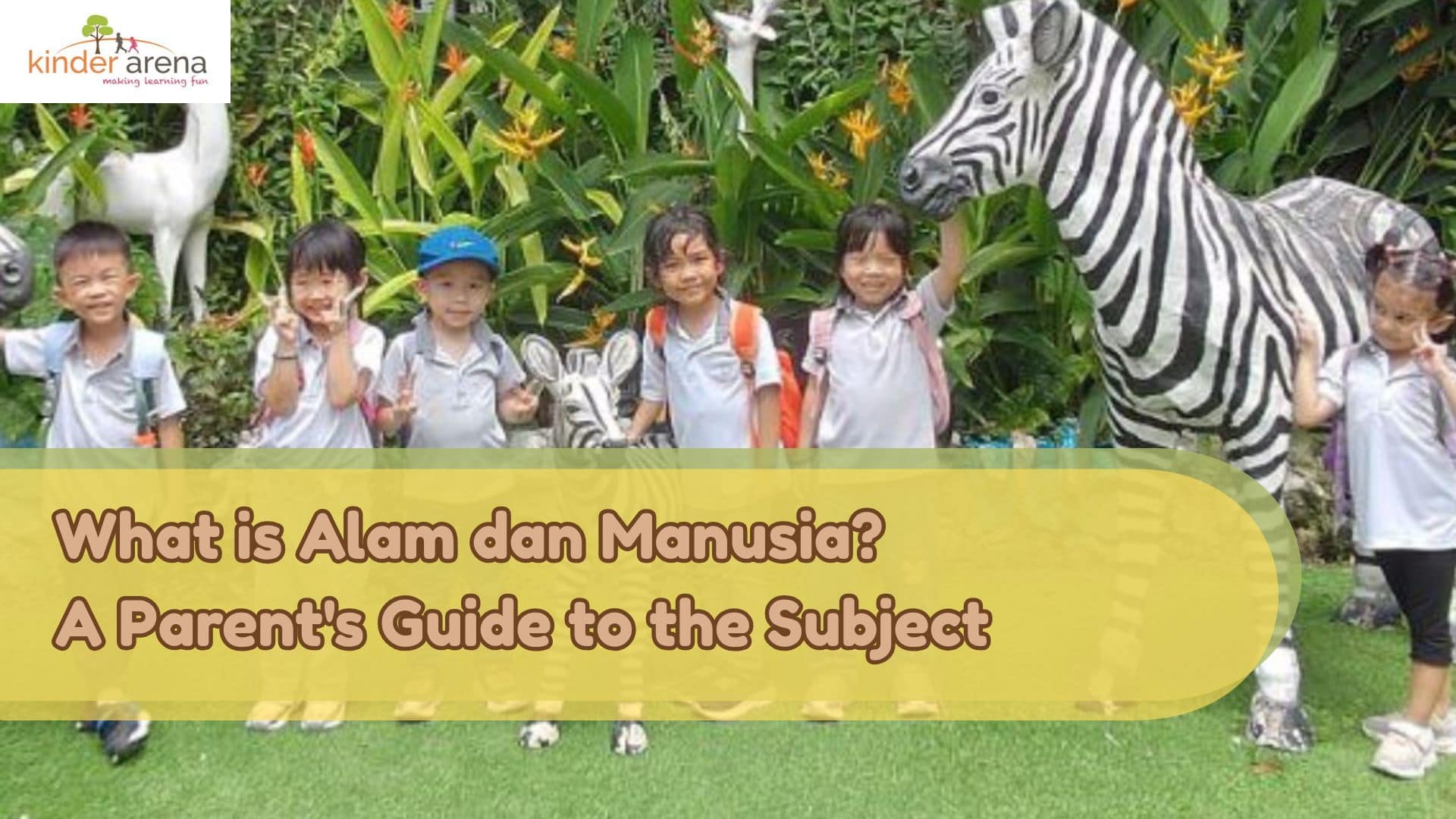
- Gardening activities to understand how plants grow
- Observing insects, weather, and natural changes
- Simple cause-and-effect experiments (e.g. water, light, materials)
Why it matters: Builds early critical thinking and a natural interest in learning
2. Encouraging Creative Expression
Focus: Express ideas through art, music, and movement
- Drawing or painting observations from nature
- Using songs and movement to explore concepts
- Storytelling based on real-life themes (family, animals, community)
Why it matters: Helps children process ideas, communicate, and build confidence
3. Strengthening 3M Foundations (Membaca, Menulis, Mengira)
Focus: Learn literacy and numeracy through real situations
- Reading simple books, labels, or topic-based materials
- Writing short reflections, captions, or basic sentences
- Counting, sorting, and measuring objects during activities
Why it matters: Makes core skills practical, not memorised
4. Supporting Character Development
Focus: Build habits, values, and social skills
- Practicing daily manners and respect
- Sharing, teamwork, and group play
- Guided discussions on responsibility and behaviour
Why it matters: Shapes emotional intelligence and classroom readiness
5. Introducing Digital Responsibility
Focus: Use technology with purpose
- Recording projects through photos or simple videos
- Learning basic digital etiquette and safe usage
- Understanding when technology is helpful vs unnecessary
Why it matters: Builds healthy, balanced digital habits early
What Makes Kinder Arena Different?
The 2027 curriculum shift reflects a philosophy that Kinder Arena has championed since day one.
Our preschool programme is naturally aligned with the future of integrated learning through:
- Using thematic, nature based exploration
- Embedding 3M tracking within projects
- Encouraging teamwork and discussion
- Supporting early digital responsibility
- Prioritising character formation alongside academics
- We use co-teaching model in our preschool
2027 is approaching quickly. Preparing early ensures your child enters Year 1 not just ready to memorise, but ready to think, connect, and apply.
Don’t wait for the transition to Year 1 to see if your child is ready.
“At Kinder Arena, we nurture the “Thinking Child” today so they can lead tomorrow.”
Source:
- KPM (Ministry of Education Malaysia) – “Kurikulum Persekolahan 2027” portal page (official landing page for KP2027 materials)
- KPM (MOE) – “Kurikulum Persekolahan 2027 Terkini” PDF (official KP2027 overview/infographic):
- The Star (27 Nov 2025) – “2027 school curriculum to introduce six new subjects…”:
- Sinar Harian (Nov 2025) – “KPM perkenal subjek Alam dan Manusia”:
- Malaysiakini (Nov 2025, BM) – “Sains, seni, muzik, pendidikan kesihatan digabung…”:
- New Straits Times (Nov 2025) – “Education Ministry to introduce Nature and Humanity in 2027”:
- Malaysia Gazette (Nov 2025) – “Mata pelajaran Alam dan Manusia gabung pelbagai disiplin…”:
- KPM Media Statement PDF (Oct 2025) – character building emphasis:
Frequently Asked Questions About Alam dan Manusia
Is Alam dan Manusia a completely new subject?
No. It is a restructured subject that combines existing areas like Science, Health, Arts, and Music into a more integrated, real-world learning approach.
Does integration mean less focus on academics?
No. Academic skills are still taught, but in a more applied and meaningful way rather than through isolated memorisation.
Will Science still be taught properly?
Yes. Scientific concepts remain core, but are taught through observation, experiments, and real-life contexts instead of standalone theory.
Is co-teaching guaranteed in every school?
Not necessarily. While encouraged, implementation may vary depending on the school’s resources, training, and teaching approach.
Should preschool start preparing children now?
Yes. Strong preschool programmes already build the curiosity, 3M skills, and character needed to adapt smoothly to this integrated learning style.